
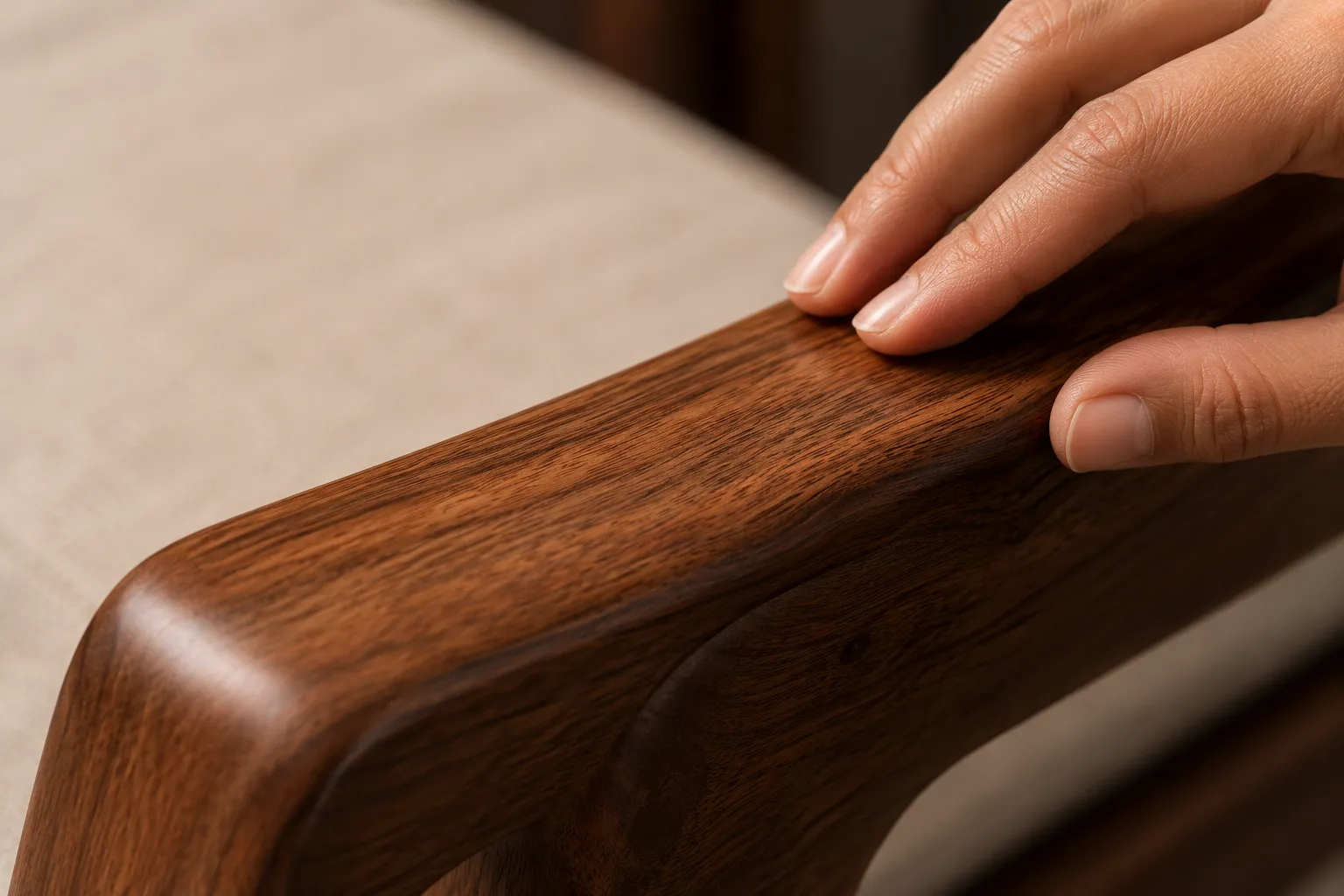
Modern life is highly visual, dominated by flat glass screens and polished synthetic surfaces. When we return home, our senses crave something different. We need touch, warmth, and organic feedback. This is the foundation of sensory design: creating spaces that engage all human senses to promote relaxation.
Wood is uniquely suited for sensory design because of its tactile signature:
- Temperature: Unlike metal or glass, which feel cold to the touch, wood is a natural insulator. It feels warm and neutral to the skin, making it comforting to interact with.
- Texture: By finishing our furniture with natural oils rather than thick polyurethane plastic, we keep the wood pores open. When you run your hand across our table or shelf, you are touching the actual wood grain, not a layer of cured plastic.
- Visual Warmth: The natural irregularities of timber grain patterns—the knots, swirls, and color changes—give the eye a complex, soothing landscape to rest upon.